
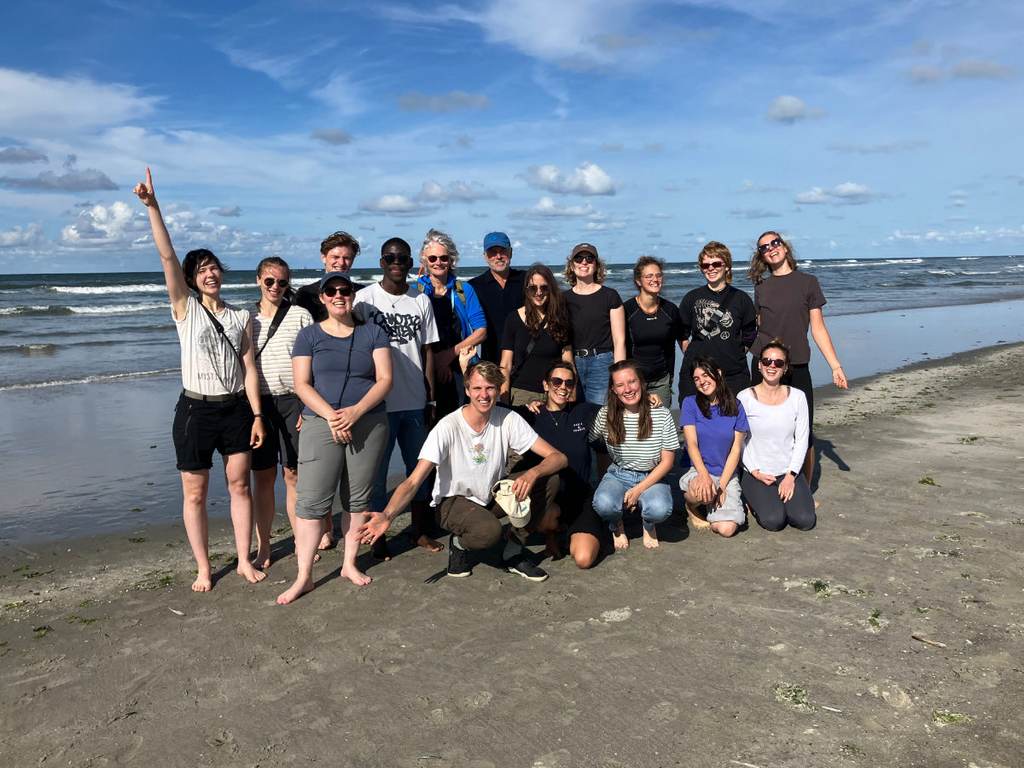
Young researchers explore challenges and opportunities in a changing Wadden Sea
The programme combined expert-led lectures with hands-on fieldwork, offering an interdisciplinary perspective on environmental science, social sciences, economics and law. The participants gained valuable insights into the Wadden Sea’s complex ecology, conservation challenges, sustainable development opportunities and governance frameworks. Field visits in and around Lauwersoog and on the island of Schiermonnikoog helped bring theory into practice, allowing the students to test ideas in real-world settings while fostering collaboration across disciplines and nationalities.
In a video clip, the students captured their days around Lauwersoog and on Schiermonnigkoog. The clip was shared during the Wadden Sea Day and can be viewed here.
“One of our objectives with these summer schools is to engage the next generation of professionals, bring the Wadden Sea closer to them, and create opportunities for them to connect with experienced conservationists and researchers”, says Anja Domnick, lead organiser from the Common Wadden Sea Secretariat. “We are confident that this year’s programme increased awareness of the pressures facing the Wadden Sea and inspired participants to contribute to its future. We hope to see some of them become active members of the Wadden Sea community in the years ahead.”
The Wadden Sea World Heritage Summer School 2026 is a joint initiative of the Trilateral Wadden Sea Cooperation, led by the Alfred-Wegener-Institute, FH Westküste University of Applied Sciences, the Waddenacademie, and the Common Wadden Sea Secretariat, with support from the World Heritage Centre Wadden Sea (WEC), Lauwersoog.